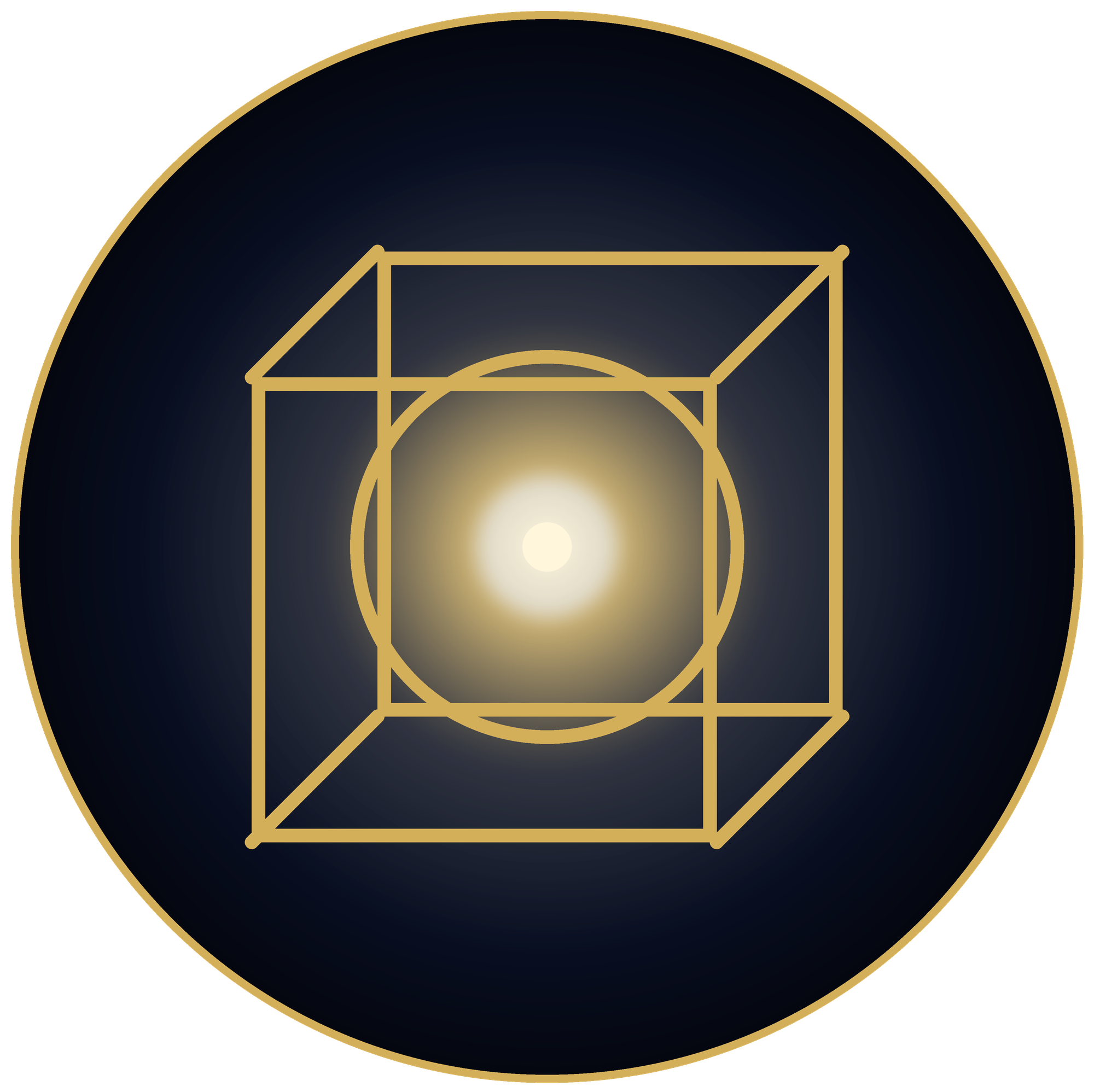
Where Existence Meets Time
By Iris J Chapman
Understanding Adam’s Original Construction and His Journey Through Source’s Classroom
- Chakra Association: Earth Star
- Sacred Geometry: The Point and Line
- Biblical Anchor: Genesis 3:9 — “Where are you?”
- Complementary Principles: Feminine (Point/Priest) and Masculine (Line/King)
I. Before Adam Builds, Adam Exists
Before Adam could construct anything, he had to exist. Before he could make a decision, experience a consequence, develop a persona, or question his circumstances, something fundamental had already been established: Adam had been given existence.

Within the 18-ChakraVerse, Adam represents corporate humanity, male and female, understood as an individualized spark of intelligent light originating in Source. He does not create himself. He does not establish the conditions of his existence, determine the fundamental laws of creation, or design the original architecture through which he will experience life. These things precede his education.
This distinction is essential, because much of Adam’s journey concerns learning to understand and responsibly exercise capacities he already possesses. His education does not manufacture his original nature; it develops his understanding of that nature and his ability to participate consciously in creation. Adam is of Source, and his relationship with Source is not something the Earth classroom must create. It exists because of his origin. Possessing that relationship, however, and understanding its significance are two different matters.
Adam may originate in Source without comprehending the nature of his origin. He may possess extraordinary capacities without knowing how to use them, operate within an intricate construction without recognizing its principles, and attempt to build a life without understanding the architecture through which he is building. This brings us to the first sacred geometry investigation: the Point and Line.
These are not elaborate geometric structures. They are among the simplest elements through which relationships can be represented, yet simplicity should not be confused with insignificance. Within our allegorical framework, the Point and Line provide a way to examine two foundational characteristics of Adam’s existence: presence and progression. Adam is always somewhere in his experience, and his experience continues unfolding through time.
The first question, then, is not what Adam intends to build. It is whether he understands where he presently stands. In Genesis 3:9, God asks Adam a question that reaches far beyond the immediate Garden narrative—“Where are you?”—and it is the question with which our investigation begins.
II. Sacred Geometry — Examining the Invisible Through the Visible
How can Adam investigate a construction he cannot directly observe? He cannot place his spiritual origin beneath a microscope, inspect the mechanisms of consciousness as he might inspect the components of a machine, or step outside existence to examine the complete architecture through which existence operates. He must work with what is available to him.
This is one reason sacred geometry becomes useful within the 18-ChakraVerse. Geometry allows us to investigate relationships through forms that can be observed, described, compared, and examined. A point establishes position. A line establishes extension. A circle introduces relationships between a center and a boundary, and more complex forms reveal further relationships still. The mathematical properties of these forms can be investigated directly; their proposed spiritual meanings, however, require interpretation. We must preserve that distinction. Sacred geometry does not grant unrestricted access to the spiritual realm—it provides models through which we can examine possible relationships between what is visible and what remains unseen.
The familiar principle “As within, so without” becomes useful here as a research method. We observe how human beings construct their societies, distribute responsibilities, establish governing structures, communicate intentions, and coordinate activities, and these visible arrangements may offer clues to the organization of Adam’s unseen capacities. Consider how an organization operates: a governing authority establishes direction, an administrative structure coordinates activities, individual offices carry out specialized responsibilities, information travels through established channels, and the results of decisions become visible through performance. We can observe these relationships without assuming that the spiritual realm is an exact duplicate of human government. The purpose of the comparison is simply to identify relationships worth investigating.
The same principle applies to historical imagery. A ruler depicted centuries ago may wear clothing unfamiliar to modern eyes, surrounded by architecture, ceremonial objects, and artistic conventions belonging to another culture. Yet the relationships represented in the image may remain recognizable. A ruler holds a staff; a sphere rests in the opposite hand; a crown identifies an office. The objects are distinct, yet they belong to one representation of authority. We can ask what each object communicates, how the objects relate, and whether those relationships illuminate something about Adam’s construction. The image remains useful because the relationships it portrays may extend beyond the culture that produced it.
Nevertheless, our method requires discipline. First, we identify what can actually be observed. Second, we examine the relationships among those observations. Third, we consider what those relationships might suggest about the unseen. We do not turn every resemblance into a spiritual law, we do not assume that a symbol carries only one meaning, and we do not claim certainty where our evidence permits only interpretation. Our purpose is to develop a coherent language for investigating Adam’s construction while remaining honest about the limits of our knowledge.
III. The Point — The Constant of Existence
In mathematics, a point identifies a position. It possesses no measurable length, width, or depth, and it does not require physical volume to establish its identity. A point can be represented by a mark on paper, but the mark is not the mathematical point itself—it merely helps us visualize a position.
Within the 18-ChakraVerse, we associate the Point with Adam’s constant presence. Adam is always here; Adam is always now. This does not mean he remains in one geographical location. He may travel from one country to another, leave one home for another, or experience dramatic changes in his circumstances. His physical location changes, but his presence does not cease. Wherever Adam finds himself, he experiences existence from his present position. He cannot occupy yesterday, nor can he move ahead and physically inhabit tomorrow. He encounters his experience from the position available to him now. This is the Point.
The Point should not be confused with Adam’s awareness of his position. Adam may be distracted, confused, asleep, frightened, or absorbed in his imagination; he may fail to recognize what is happening around him. None of these conditions eliminates his present existence. Adam does not need to understand the Point for the Point to operate. This distinction is particularly important when considering unconscious construction. A person may spend years repeating behaviors without examining their origins, while relationships develop, habits become established, opportunities are neglected, and consequences accumulate. Throughout that process, Adam remains present. He may not recognize the significance of his participation, but he has never ceased to occupy the Point.
The feminine and priestly principle
Within our symbolic interpretation, the Point is associated with the feminine principle of Adam’s original nature, and we also associate this principle with the priestly capacity. The symbolic characteristics under consideration include constancy, presence, receptivity, understanding, and integration. These are not mathematical properties of a point; they are interpretive associations that help us investigate Adam’s original construction.
The priestly principle concerns the capacity to understand relationships, recognize meaning, and participate in integration, and it provides an important foundation for Adam’s development. But possessing a capacity for understanding does not mean understanding has already been achieved. An inexperienced Adam may possess the priestly principle without exercising discernment effectively. He may recognize a circumstance without grasping its significance, or encounter a consequence without seeing its relationship to his own actions. The capacity exists; its expression requires development. This is why the Point should not be mistaken for wisdom itself. It provides an allegorical foundation for the presence from which understanding can grow.
Adam cannot abandon that presence. He may attempt to escape responsibility, suppress a memory, deny an action, or avoid confronting a consequence, yet whatever he does, he must do it from his present position. He cannot step outside the Point to escape himself. The question is whether he will learn to understand what is happening there.
IV. The Line — The Principle of Progression
A mathematical line represents continuous extension. It establishes relationships between positions and, when given an orientation, can be used to represent direction. A mathematical line does not inherently move; movement through time is the spiritual allegory we are investigating.
Within the 18-ChakraVerse, the Line represents the compulsory progression of Adam’s experience through time. Adam cannot stop time. He may wish to prolong a pleasurable experience or shorten a difficult one; he may attempt to delay a decision, avoid a responsibility, or refuse to acknowledge a changing circumstance. Nevertheless, time continues. Adam grows older. Conditions change. Opportunities emerge and disappear, relationships develop or deteriorate, and actions produce consequences that become part of the circumstances through which Adam must continue.
The Line does not wait for his permission. It continues whether Adam is prepared or unprepared, awake or asleep, confident or confused. Even refusing to act does not suspend progression. A person who postpones a necessary conversation may believe that nothing is happening, yet time passes, expectations shift, and the unresolved matter may grow more complicated. A person who refuses to develop a capacity may remain inexperienced while circumstances continue demanding its exercise. The Line moves on regardless of Adam’s willingness to participate consciously.
The masculine and kingly principle
Within our symbolic framework, the Line is associated with the masculine principle of Adam’s original nature, and we also associate it with the kingly capacity. Its symbolic characteristics include direction, will, decision-making, action, and governance.
Here again, we must distinguish possession from mastery. Adam possesses the capacity to exercise will, but this does not mean his decisions are wise. He possesses the capacity to act, but this does not guarantee that his actions will accomplish what he intends. The kingly principle must be educated. A ruler who acts without understanding may hold authority while lacking the discernment to exercise it responsibly. Similarly, Adam may establish goals, make decisions, and pursue desires without adequately understanding the consequences of his participation. The Line provides the allegorical foundation for examining progression and direction, but progression itself is not mastery.
Movement is not the same as direction
This distinction deserves particular attention. Adam cannot choose whether time progresses, but he can exercise a measure of choice concerning his actions within that progression. Consider someone traveling along a road. Time passes regardless of whether the traveler walks, rests, changes direction, or becomes lost. The traveler may choose a route but cannot control every condition along the way: a storm may interrupt the journey, a road may be closed, another traveler may act unpredictably. The traveler has jurisdiction over certain decisions, not over the entire environment.
This illustrates Adam’s relationship to the Line. He can develop greater responsibility for his direction without gaining control over every outcome, because the Cube remains Source’s classroom, governed by conditions Adam did not establish. Adam cannot stop the Line. His responsibility is to learn how to participate within its progression.
V. The Point and Line — Distinct Components of One Construct
The Point and Line have different characteristics. The Point represents Adam’s constant presence; the Line represents the progression of his experience through time. Their identities must remain distinct, yet within the construction we are examining, they operate inseparably wherever time applies. Adam does not first acquire the Point and later construct the Line. Both belong to the original conditions through which he experiences existence.
The Point remains present while the Line continues. The Line carries Adam into changing circumstances without eliminating his present position. The Point does not prevent progression, and progression does not eliminate presence.
Consider the beginning of a new day. Adam awakens in circumstances shaped partly by yesterday’s decisions. He may have obligations to fulfill, relationships requiring attention, or consequences demanding a response. Yesterday is no longer available as a place from which he can act, and tomorrow has not yet arrived, so he must begin from the position he presently occupies. As the day unfolds, the Line continues: Adam encounters changing circumstances, makes decisions, and experiences results. At every stage, he remains at the Point. The next moment does not require him to manufacture a new capacity for presence. He is simply present within the unfolding experience.
This relationship reveals an important characteristic of Adam’s education. His circumstances change, his understanding may develop, his responsibilities may increase, and his ability to exercise his capacities may improve—but the foundational relationship between presence and progression remains. Adam does not graduate from the Point, and he does not outgrow the Line. He learns to participate more consciously within the conditions they represent.
We should not assume, however, that every subsequent geometric form will share this same relationship. The Circle, Vesica, Triad, Square, and more complex structures must each be investigated according to their own characteristics. The Point and Line establish our starting foundation; they do not determine every conclusion that follows.
VI. Masculine and Feminine — Adam’s Original King-Priest Nature
Genesis 1:27 presents humanity as male and female in relation to the image of God. Within our interpretation, Adam represents corporate humanity, not merely the first biological man. This distinction allows us to investigate masculine and feminine principles as capacities belonging to Adam’s original nature rather than as exclusively biological characteristics. Both principles are present at origin. They are not rewards for completing chakra development, nor capacities that must be manufactured through education. Adam already possesses them. What remains to be developed is his understanding of their functions and his ability to exercise them cooperatively.
The Point and the priest
We associate the Point with the feminine, priestly principle. The priestly capacity concerns understanding, receptivity, and integration; it supports Adam’s ability to recognize relationships and consider the significance of his participation. A priestly capacity that remains undeveloped may recognize the individual pieces of an experience without understanding how they belong together. Development increases the possibility of integration.
The Line and the king
We associate the Line with the masculine, kingly principle. The kingly capacity concerns will, direction, action, and governance. An undeveloped kingly capacity may act impulsively, pursue immediate satisfaction, or attempt to exercise authority without sufficient understanding. Development increases the possibility of responsible action.
Neither capacity can replace the other. Understanding without action may remain unapplied, and action without understanding may produce consequences that could have been avoided. Their cooperation becomes essential.
King-priest and priest-king
Within our research, we recognize that one principle may be more naturally prominent in an individual Adam. One may approach experience primarily through action and develop understanding through the consequences encountered. Another may approach experience primarily through observation, reflection, and integration before acting. These differences do not establish superiority; they describe possible tendencies in the expression of capacities that belong to the same original construction.
A king-priest must develop the priestly capacity sufficiently to govern with understanding. A priest-king must develop the kingly capacity sufficiently to translate understanding into responsible action. Balance does not require both principles to express themselves identically in every situation. It requires cooperation appropriate to the circumstances.
The staff and sphere
Historical representations of rulership provide an interesting visual analogy.

A ruler may hold a staff in one hand and a sphere in the other. The staff offers a visible analogy for the Line: its extended form can represent direction, reach, and the exercise of authority. The sphere, particularly its center, offers a visual analogy for the Point: its form invites consideration of centeredness, constancy, and the relationship between a central position and the surrounding structure. The objects remain distinct, yet one ruler holds both.
This is not proof that the original makers of these objects intended our interpretation. It is an example of how visible imagery can help us examine relationships within Adam’s construction. We might also observe which hand holds each object and investigate the historical conventions involved, but those questions require their own evidence and should not be allowed to determine our conclusions prematurely. For the present study, the important relationship is straightforward: one ruler, two distinct objects, complementary functions. Likewise, Adam possesses kingly and priestly capacities within one original nature, and his education develops their cooperative exercise.
VII. Adam in Eden — Choosing the Method of Learning
The Garden narrative provides our first major biblical illustration of Adam’s relationship to the Point and Line. Genesis 2–3 presents Adam receiving instruction concerning the conditions of his existence. Within our interpretation, Adam already belongs to Source; he does not require the Cube to establish that relationship. Yet possessing a relationship with Source does not mean Adam fully understands the nature of that relationship or the principles governing his existence.
The Garden presents a choice concerning knowledge. God provides instruction, and Adam encounters an alternative. Within the 18-ChakraVerse, we interpret Adam’s actions as demonstrating a desire to know what God knows through a route that does not depend upon God’s direct instruction. He wants to discover through experience. He wants to know for himself. This desire is significant because the method Adam chooses carries consequences he does not yet understand.
Adam and the serpent persona
In our established interpretation, the serpent represents Adam operating through a misaligned persona. The serpent is not an independent authority with rightful jurisdiction over Adam’s inner kingdom; it is an expression of Adam’s own capacity to construct and operate through personas. Eve, understood within our framework as the Spark of the Holy Spirit entrusted to Adam as his helpmeet, participates in accordance with her role. She is not another Adam, nor is she the source of Adam’s independent desire. Adam is responsible for the persona through which he pursues his alternative.
The narrative then reveals something important about his level of understanding. Adam’s subsequent responses include fear, concealment, and attempts to redirect responsibility. He appears surprised by what his decision has produced. He wanted knowledge, but he did not comprehend everything involved in obtaining it through the route he selected.
This is a recognizable pattern in human experience. A person may desire independence without understanding the responsibilities that accompany it. Someone may pursue wealth without considering what sustaining it will require, or seek authority without understanding the demands of governance. Desire can identify an objective without supplying the wisdom needed to achieve or sustain it. Adam’s actions in Eden illustrate this distinction: he seeks knowledge independently, but his response to the consequences shows that he has not yet mastered the responsibility that accompanies his choice.
The Point and Line remain
Adam’s decision does not eliminate his original construction. He remains at the Point, and the Line continues. His circumstances change dramatically, but the foundational conditions of presence and progression remain. He must now encounter the results of his actions, and those results become part of his education.
The Creator’s question, “Where are you?” is especially meaningful within this interpretation. Adam is being called to examine his present condition. What has he done? What does he understand? What responsibility belongs to him? He cannot return to the position he occupied before the decision; he must respond from the position he now occupies. Adam sought knowledge through experience, but he could not determine every consequence of the experience he chose.
VIII. The Cube — Where the Line Carries Adam
Within the 18-ChakraVerse, the Cube represents the educational environment established by Source. Adam does not own the Cube. He does not establish its fundamental laws, determine every condition within it, or possess authority over the independent choices of other Adams. His jurisdiction concerns his own participation.
This distinction helps explain why experience becomes such a demanding teacher. Adam may intend one result and encounter another. He may prepare carefully and still discover that circumstances contain variables he could not anticipate. He may make a decision with limited information and only later recognize something he did not previously understand. The Cube provides the conditions through which such experiences occur.
Consequence is the teacher
Consequence does not necessarily arrive with an explanation. One person may repeat a behavior and encounter similar difficulties without ever recognizing the relationship between the two. Another may experience an unexpected result, examine the circumstances, and discover a principle that changes future decisions. Both have encountered consequences, but only one may have developed understanding from the experience. This distinction is central to Adam’s education: experience alone does not guarantee wisdom. Adam must learn to examine what happened, consider his participation, and recognize relationships that may not have been apparent when he acted.
The Cube can make this process difficult. Its conditions are complex, Adam’s knowledge is limited, and other Adams exercise their own wills. Circumstances change, and the meaning of an experience may not be immediately apparent. The classroom may even obscure Adam’s understanding of his origin. He may become so absorbed in the conditions of physical existence that he loses sight of the relationship with Source that preceded his education. Yet that relationship is not eliminated. Adam remains of Source, even when he does not understand Source.
What remains beyond our knowledge
Our present investigation concerns Adam’s existence within the Cube, where time is experienced as compulsory progression. We cannot establish from this study how time operates beyond the Cube, nor can we determine whether the Point and Line operate in precisely the same manner outside this educational environment. Those questions belong to territory for which we do not presently possess sufficient evidence. We can examine what is available. Within the Cube, Adam experiences presence, progression, changing circumstances, and consequences, and his responsibility is to develop understanding through his participation.
IX. The Inner and Outer — Understanding and Manifestation
The relationship between the visible and invisible works in two directions within our research method. First, Adam examines visible relationships to investigate his unseen construction. Second, Adam’s developing inner understanding influences how he participates in the visible world. These are related but distinct processes: the first concerns interpretation, and the second concerns manifestation.
The law written within
Jeremiah 31:33 presents a promise in which God places his law within his people and writes it upon their hearts. The passage is significant because it distinguishes an external instruction from an internally established relationship to that instruction. A person may know that a law exists without understanding its purpose. Someone may obey a rule out of fear, habit, or concern about punishment while remaining unaware of the principle the rule protects. Another person may develop sufficient understanding to recognize why the law matters. The outward behavior may initially look similar, but the inner relationship to the law is different.
Consider a child approaching a busy street. At first, the child may look both ways before crossing simply because an adult requires it. With experience, the child begins to understand traffic, distance, speed, visibility, and the consequences of entering a roadway without sufficient awareness. The instruction has not changed; the child’s understanding has developed. Eventually, the person exercises the principle responsibly without needing anyone to repeat the original command. This illustrates the difference between external compliance and internalized understanding. Within our allegorical framework, Adam’s education involves developing this kind of relationship to the laws governing his existence. He does not invent those laws. He learns why they matter and how to participate within them.
From inner understanding to outward manifestation
Adam’s inner condition influences his choices. His understanding, intentions, developed capacities, and established patterns all contribute to the decisions he makes, and those decisions shape his outward manifestations. A person who has developed patience may respond to provocation very differently from someone whose reactions remain governed by immediate impulses. Someone who understands the responsibilities accompanying a desired achievement may prepare differently from someone focused only on obtaining it. Inner development becomes visible through participation.
However, this does not mean Adam controls every external result. The Cube remains governed by conditions beyond his jurisdiction. Internal development can improve the quality of his decisions without guaranteeing that every decision produces his preferred outcome. This distinction protects our understanding of manifestation from becoming a claim of unrestricted control. Adam is responsible for his participation. Source remains the authority over creation.
X. Conscious and Unconscious Construction
Adam participates in existence whether or not he recognizes the significance of his participation. The Line continues, the Point remains, circumstances arise, choices are made, and consequences follow. Some of Adam’s construction occurs without deliberate examination. He may establish habits, cultivate desires, develop personas, and organize patterns of behavior without fully understanding what he is creating.
These constructions can become increasingly influential. A defensive response repeated over many years may become an established persona. A desire pursued without examination may begin organizing decisions around itself. An unchallenged assumption may quietly shape relationships and opportunities. Adam may eventually discover that he has constructed something he no longer wishes to sustain. This is unconscious construction. It does not mean Adam has ceased exercising his capacities; it means he has not yet developed sufficient awareness of how he is exercising them.
Becoming a conscious constructor
Conscious construction begins when Adam increasingly recognizes his participation. He examines what he wants, why he wants it, how he intends to obtain it, and what sustaining it may require. He considers the consequences of his actions. He recognizes that desire alone does not establish alignment and that favorable outcomes alone do not prove wisdom. He becomes more attentive to the relationships between intention, action, and manifestation. Here the priestly capacity contributes understanding and integration, the kingly capacity contributes direction and action, and their cooperation becomes increasingly important.
But understanding is not the same as mastery. A person may understand the importance of restraint and still fail to exercise it under pressure. Someone may recognize the need for responsible governance yet discover that fear, resentment, or desire influences decisions more strongly than expected. Mastery must be demonstrated through action, and so Adam’s education continues beyond recognition. He must develop the ability to apply what he understands.
The Point and Line remain active throughout this process. Awareness does not stop time; it changes the quality of Adam’s participation within time. This is the movement from unconscious construction toward conscious construction.
XI. “Where Are You?” — The Question That Remains
We return to Genesis 3:9: “Where are you?” Within the Garden narrative, the question follows Adam’s actions and his attempt to conceal himself. Within our sacred geometry interpretation, it becomes a continuing invitation to examine one’s present condition. The question does not ask Adam merely to identify his physical location. It calls attention to his relationship with his actions, understanding, responsibilities, and circumstances.
Adam may know where he is geographically while remaining uncertain about what he has constructed. He may occupy a position of authority without understanding how he arrived there. He may enjoy favorable circumstances while remaining unaware of the responsibilities accompanying them, or experience hardship without possessing enough information to explain its origin. In each situation, the question remains relevant: Where are you?
The past cannot be occupied
Adam may remember yesterday. He may evaluate previous decisions, recognize mistakes, or appreciate accomplishments. But he cannot return to yesterday and act from that position. The past can inform his present understanding; it cannot become his present location.
The future cannot be occupied
Adam may imagine tomorrow. He may establish goals, develop plans, and prepare for possibilities. But he cannot exercise tomorrow’s decisions from tomorrow’s position before arriving there. Preparation occurs now, and action occurs from the present.
Responsibility belongs to the Point
Every decision available to Adam must be made from the position he presently occupies. This does not mean that every circumstance is his responsibility or that he possesses complete control over his environment. It means his own participation begins where he is. He may not have chosen the conditions into which he was born, and he may possess capacities whose range of development has been shaped by opportunities beyond his control. The amount entrusted to him, the circumstances surrounding it, and the opportunities available for its development may differ greatly from those of another Adam. Yet he must work from the position available to him. Grace does not require identical circumstances, and responsibility does not require identical opportunities. Adam’s education concerns how he participates with what has been given.
As his understanding develops, his answer to the question may change. Where he once responded with fear, he may develop courage. Where he once redirected responsibility, he may develop accountability. Where he once acted without examining consequences, he may learn to consider them. The Point remains constant and the Line continues, but Adam changes through what he learns and how he applies it. He cannot choose when to occupy the Point; he can develop the capacity to answer responsibly for what he is doing there.
XII. Preparing for the Circle — The Next Geometric Investigation
The Point and Line establish our first sacred geometry relationship. They introduce presence and progression as foundational characteristics of Adam’s existence within time, and they provide an allegorical starting point for examining the feminine and masculine principles of his original nature. The Point is associated with the priestly capacity; the Line is associated with the kingly capacity. Both belong to Adam before his education begins, and their cooperative expression must be developed.
Having established this foundation, we can begin investigating more complex geometric relationships. The next form in our established mapping is the Circle, associated with the Root Chakra. The Circle introduces characteristics that cannot be fully explained by the Point and Line alone. Its relationship between a center and a boundary opens further possibilities for examining Adam’s construction and his experience within the Cube. Our research will consider the Circle’s observable characteristics, its relationship to the forms already examined, its possible spiritual significance, and the biblical narratives that may illuminate its function.
We must not assume in advance that every subsequent form represents an original component in precisely the same sense as the Point and Line. Each relationship deserves its own investigation. The purpose is not to force spiritual conclusions into geometric forms, but to investigate those forms carefully and determine what they may help us understand.
XIII. Conclusion — Always at the Point
Adam did not create himself. He did not establish the Point, and he did not create the Line. He entered existence with an original construction provided by Source, in which the Point represents his constant presence and the Line represents the progression of his experience through time. They are distinct, yet inseparable within the conditions we have examined, and together they provide an allegorical foundation for understanding Adam’s original king-priest or priest-king nature. His education does not create these capacities; it develops his ability to exercise them responsibly.
Adam may misunderstand his circumstances. He may pursue desires without recognizing their implications, construct personas without understanding their influence, and seek knowledge through experience only to discover that the consequences exceed his expectations. Yet his original construction remains. The Point does not disappear when Adam becomes confused. The Line does not stop when Adam becomes afraid. And Source does not cease to be his origin simply because Adam has not yet learned to understand that relationship.
This is why the question from Genesis remains so significant. “Where are you?” is not merely a question about location. Within our interpretation, it invites Adam to examine his present condition, recognize his participation, and develop the understanding necessary to continue responsibly.
Before Adam understood the Point, he was already there. Before he recognized the Line, time was already carrying him forward. He did not create either one; both belonged to the construction Source had given him. The Point remained constant, and the Line continued. Adam could not return to yesterday, and he could not occupy tomorrow. He could only examine his present position and determine how he would participate in what came next.
His understanding would develop. His circumstances would change. His choices would produce consequences. And the journey would continue. Through it all, one question would remain:
“Adam, where are you?”
The 18-ChakraVerse Sacred Geometry Series
Article 01 — The Point and Line: Where Existence Meets Time
By Iris J Chapman
This article presents the 18-ChakraVerse’s allegorical interpretation of sacred geometry and biblical narratives. Its geometric associations are interpretive models for spiritual research, not established mathematical or scientific descriptions of consciousness.